 X (Twitter)




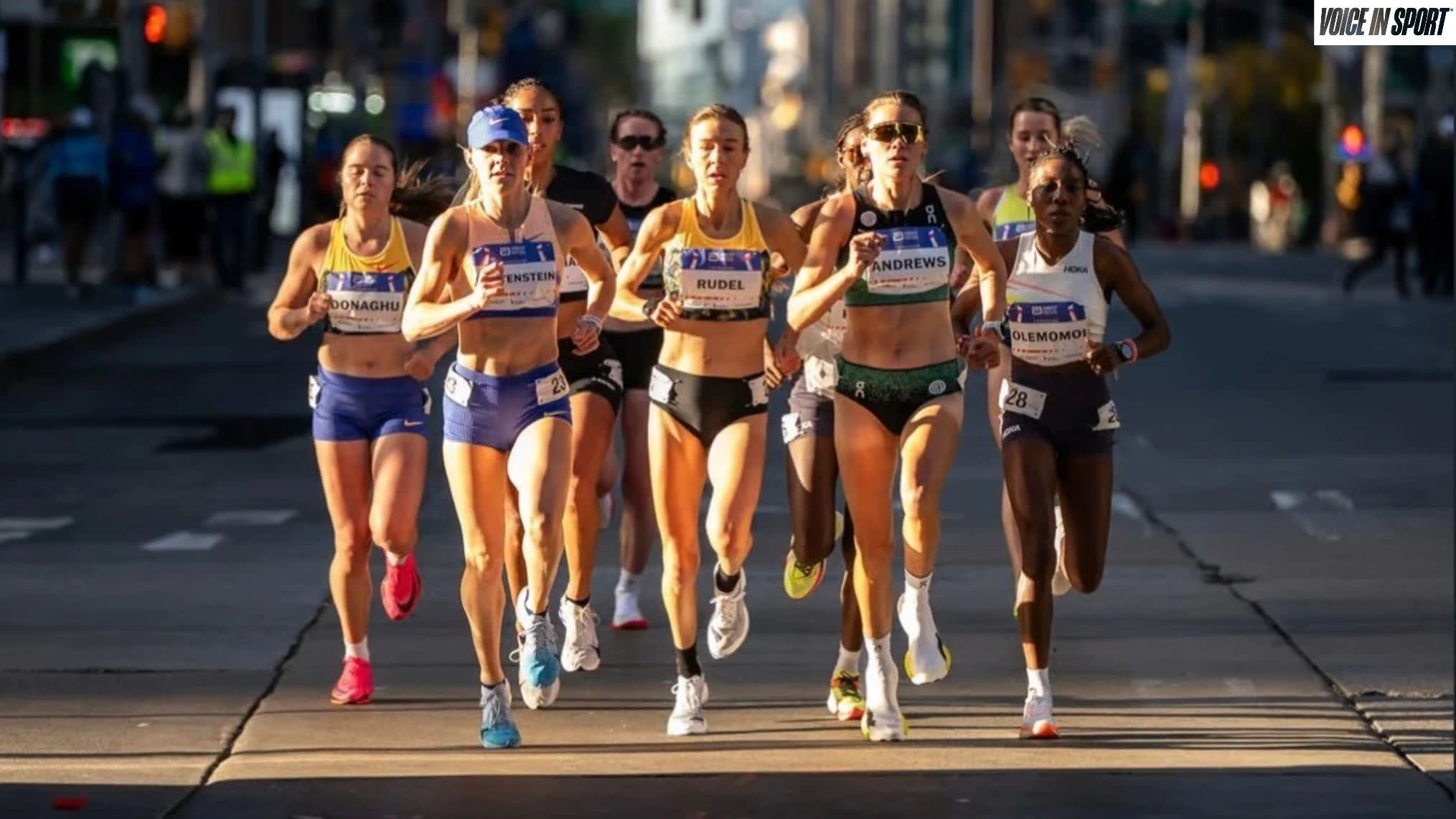
NYC road running made history this week. It began Halloween morning with the annual Abbott Dash to the Finish Line 5K, held the day before the New York City Marathon (NYCM). Rachael Rudel continued her road success, winning the women’s race in 15:35.
Her win set the stage for an eventful weekend. The next morning, Jess McClain ran 2:24:42 at the 2026 NYC Marathon, finishing just behind 2024 champion Sheila Chepkirui. McClain became the first American woman to place second in New York since Shalane Flanagan in 2010. Over the previous 36 years, only Flanagan and Kim Jones, who finished third in 1990, had reached the podium.
VIS spoke with three elite women who raced in New York this weekend— McClain, Rudel, and Maddie Block, another runner in the NYCM elite field—to hear the stories behind their success and learn about the journeys that brought them to NYC's roads.
Progress > Perfection
Straight out of her collegiate career at Stanford University, McClain entered the professional running world before stepping back from the sport.
“As a first-time professional athlete in 2015-2018, running is what defined me, and I tied almost every workout and every race to my self-worth,” McClain said to VIS via her press team at Brooks Running.
Her return to the sport—and her new focus on marathon running—has been notably different from her first stint, thanks in part to a “much broader view of the world.” That perspective took shape gradually as she considered returning to professional running.
“I gave it real thought and took the time to understand why I wanted to come back and what I wanted this chapter to look like,” McClain said. “That ownership shapes how I handle setbacks (or detours!) because the decision is mine. I can meet a hard day with perspective, and I can step back, reassess, and adjust without feeling like I've lost control of the path. I also know that these days make me a better athlete, not the ones that go perfectly to plan.”
Rudel also took an extended break from the sport before recently returning to racing, and she’s already found tremendous success. One of the biggest changes she’s experienced, she says, is shifting her mindset away from perfectionism and results, and toward consistency and joy.
“The biggest shift has been replacing pressure with curiosity,” Rudel told VIS via Instagram. “I no longer feel like I have to prove myself through race results. Instead, I get to show up, compete, trust myself, and see what's possible!”
Block balances elite marathon training and racing with the busy schedule of medical school. She says that, if anything, medical school has helped her become a stronger runner by changing how she views the sport and reminding her that it’s enough to show up as she is on any given day—not to perform perfectly all the time.
“Prior to med school, running and academics fell in line with that for me, and I was holding on to outcomes pretty tightly,” Block said to VIS via Instagram. “[But now,] my focus has shifted to prioritizing consistency over outcomes of workouts or races, such as hitting perfect splits or running the perfect workout. Running in the margins of med school has made me focus on just showing up and meeting myself where I was on the day.”
“The biggest shift has been replacing pressure with curiosity. I no longer feel like I have to prove myself through race results. Instead, I get to show up, compete, trust myself, and see what's possible!”
More than a Runner
Rudel works full time outside her running career, so her schedule is packed. Even so, she sees that as a source of success and a way to relieve stress—not as another stressor. Running is a joyful escape.
“I am no longer running to find my happiness or self-worth. I'm running because I've found those things outside of the sport, and now I get to see just how far that freedom can take me,” Rudel said. “At the end of the day, running is something I get to do, not something I have to do.”
McClain also works full time outside her running career as a nonprofit executive and echoes a similar experience.
“Because I invest in the people and passions that fill my life outside of running, I approach the sport with more of a process-oriented mindset vs. an outcome-oriented mindset,” she said. “This balance and approach gives me perspective on bad days and keeps me grounded on good ones.”
Having a full, rich identity beyond the sport has helped McClain find even more success in her running.
“The people and interests outside of running recharge me, and they've made me a stronger, more resilient athlete,” she said.
For Block, medical school has helped her see running as a joyful addition to her life. It has also reinforced the value of having commitments and sources of fulfillment beyond sport—not only for athletic success, but for overall happiness.
"It’s so important to have multiple identities throughout your life,” she said. “Medicine is a humble reminder that those identities can be fragile, and we have to be multi-faceted to find fulfillment long term.”
Never running alone
For all of these women, community and mentorship have made all the difference. They’re not alone in balancing busy schedules with high-level athletics, and they’ve found invaluable support and guidance by connecting with women who have navigated similar experiences, both in the past and today.
Rudel and McClain are both coached by David Roche and VIS Expert Megan Roche through the Some Work All Play (SWAP) coaching program. They also both work full-time while pursuing highly successful running careers, giving them a shared experience that helps them connect and support one another.
“Having people to lean on for advice, mentorship, and perspective throughout this journey has been invaluable. It's also been incredibly helpful to connect with amazing women like Jess McClain, who understand this balance firsthand,” Rudel said.
For McClain, having a network of supporters who build her up and support her as a “whole person, not just an athlete,” has been formative to her pro career.
“Taking responsibility doesn't mean going at it alone. Involving people like David, my body movement specialists George, husband Connor, and the partners around me who share my core values has been critical,” McClain said.
Block has found similar support in the running community, connecting with and learning from accomplished athletes who have balanced education and careers in medicine with fast racing.
“Luckily I’ve had some wonderful people before me who I look to as examples—professional runner for Nike and anesthesia resident Rachel Drake; former professional runner for Under Armor (during first 1.5 years of med school) and current resident Abby Kohut-Jackson,” Block said. “People who have been willing to chat with me about their experiences and not only show me that it is possible, but how to structure it, and how things change over time.”
It’s a community effort, with athletes and their support systems working together toward success on race day.
“With time, perspective, and the right people in my corner, I can navigate the ups and downs of this chapter with confidence and find joy in the journey of discovering my best self,” McClain said.
