 X (Twitter)


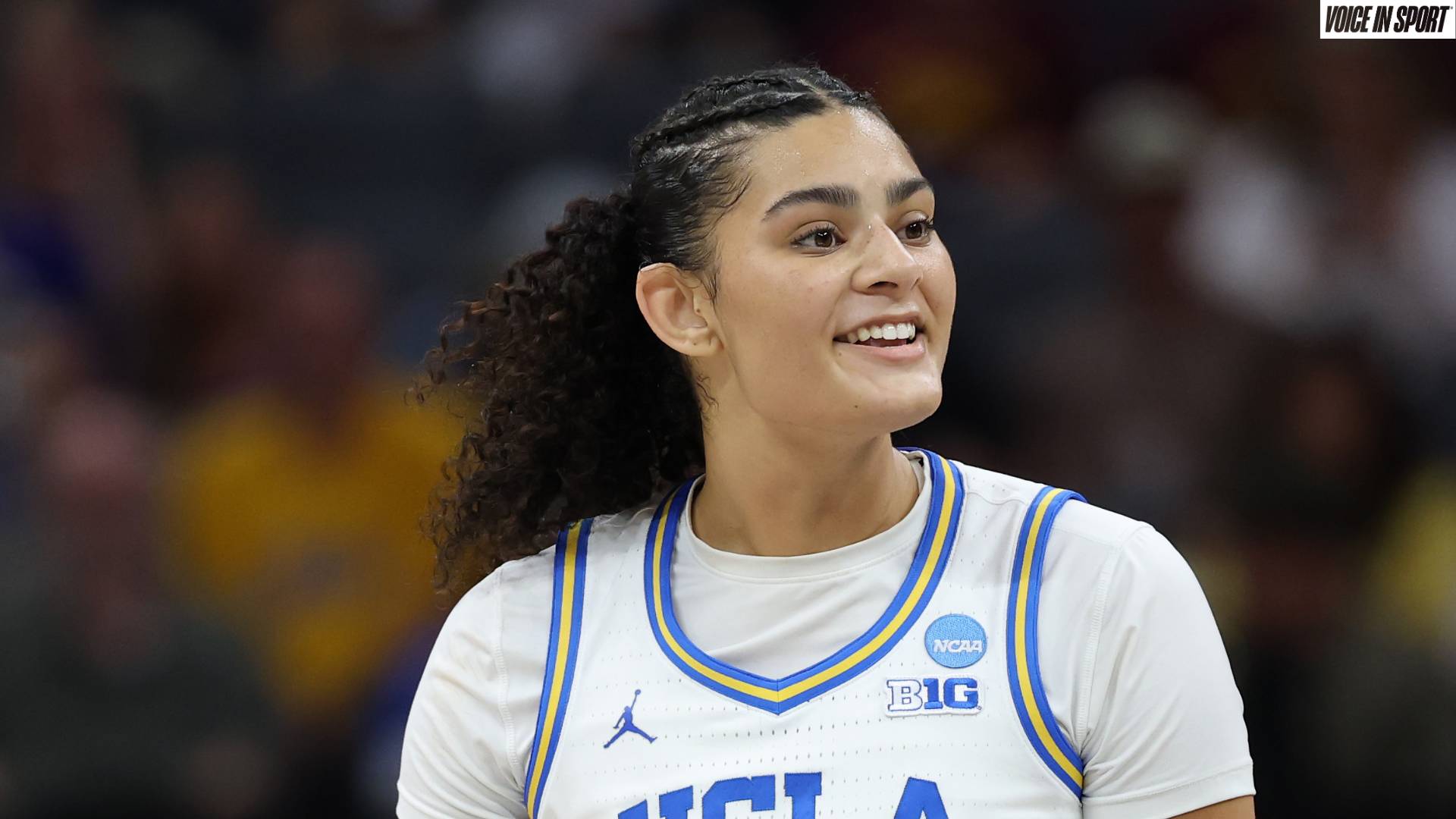
No. 1-seeded UCLA women’s basketball entered March Madness with just one loss—Texas on Nov. 26. And on Friday, UCLA was facing the Longhorns again with an appearance in the championship game on the line.
This time, UCLA was able to defeat No. 1-seeded Texas when it mattered most—the Final Four.
A 51-44 victory is sending the Bruins to the March Madness Championship for the first time in program history, a feat assisted by Lauren Betts. Betts contributed 16 points and 11 rebounds—her 14th double-double of the season—on 7-for-10 shooting from the field.
But her journey, like many success stories, had its struggles.
Betts’ Story
Betts, per ESPN, was the No. 1 overall recruit in the class of 2022. She played her freshman year at Stanford, where she saw less than ten minutes of action a game and averaged only 5.9 points. She was struggling mentally during her time with the Cardinal.
“It’s no secret that I had a miserable freshman year at Stanford,” Betts said in her Player’s Tribune article. “I was not thriving, mentally or physically…But during that time, I was really suffering, and I felt like I had nowhere to turn. I had this mindset: If you’re not producing, you’re not worthy.”
She transferred to UCLA before her sophomore campaign, where the expectations and pressure from both herself and others became too much.
Halfway through the season, she realized she was dealing with depression. Betts knew the only option she had was to go to a hospital.
“It happened so randomly,” Betts said in the Player’s Tribune article. “About two years ago, after months of feeling kind of numb, I woke up one morning feeling everything. Every anxious thought I’d ever had about myself hit me all at once. My anxiety was at an all-time high. My mind said, I don’t want to do this anymore.”
When she checked out of the hospital, she told her teammates what had been happening and she started her therapist. She finished her sophomore season with the Bruins averaging 13.7 points and 8.6 rebounds on a 64.7% clip from the field.
Betts’ junior campaign boasted career-high marks in scoring and rebounding, averaging 20.2 points and 9.5 rebounds per game. She was named the winner of the Naismith Defensive Player of the Year award and was named a First Team All-American.
“I think the thing about depression that a lot of people don’t talk about is, it never really goes away.”
She also helped lead the squad to the program's first-ever Final Four, marking the end of an extraordinary season for the center. But this did not—and could not—cure her depression.
“I think the thing about depression that a lot of people don’t talk about is, it never really goes away,” Betts said in her Player’s Tribune article. “You can learn how to manage it really well and find ways to cope. You can take medication and pick up hobbies and work on your self-esteem. But it’s an illness—it’s not a choice that you make.”
Betts overcame a lot in order to continue playing, and she has made sure it is worth it through her game this season.
She is averaging 17.2 points and 8.7 rebounds, team-high marks in both categories, while also shooting at a 58.2% rate. Betts has picked up multiple honors this season, including Big Ten Player of the Year and Defensive Player of the Year, Lisa Leslie Award Finalist, and First-Team All-American.
The Bruins have been led by Betts’ scoring in all but one matchup in their historic March Madness run, and will likely look to rely on her once more in the championship matchup against South Carolina on Sunday.
She credits her team to her ability to get through hard times and said the maturity on the team has helped them get to where they are today,
“I think about like the battles that I've had and to be able to overcome all of that and to be able to stay true to who I am and just push through adversity [is really special],” Betts said after the Texas matchup. “It really speaks to this program and really how much they've helped me and how special everybody is here. And I really wouldn't be able to do it without them.”
