 X (Twitter)



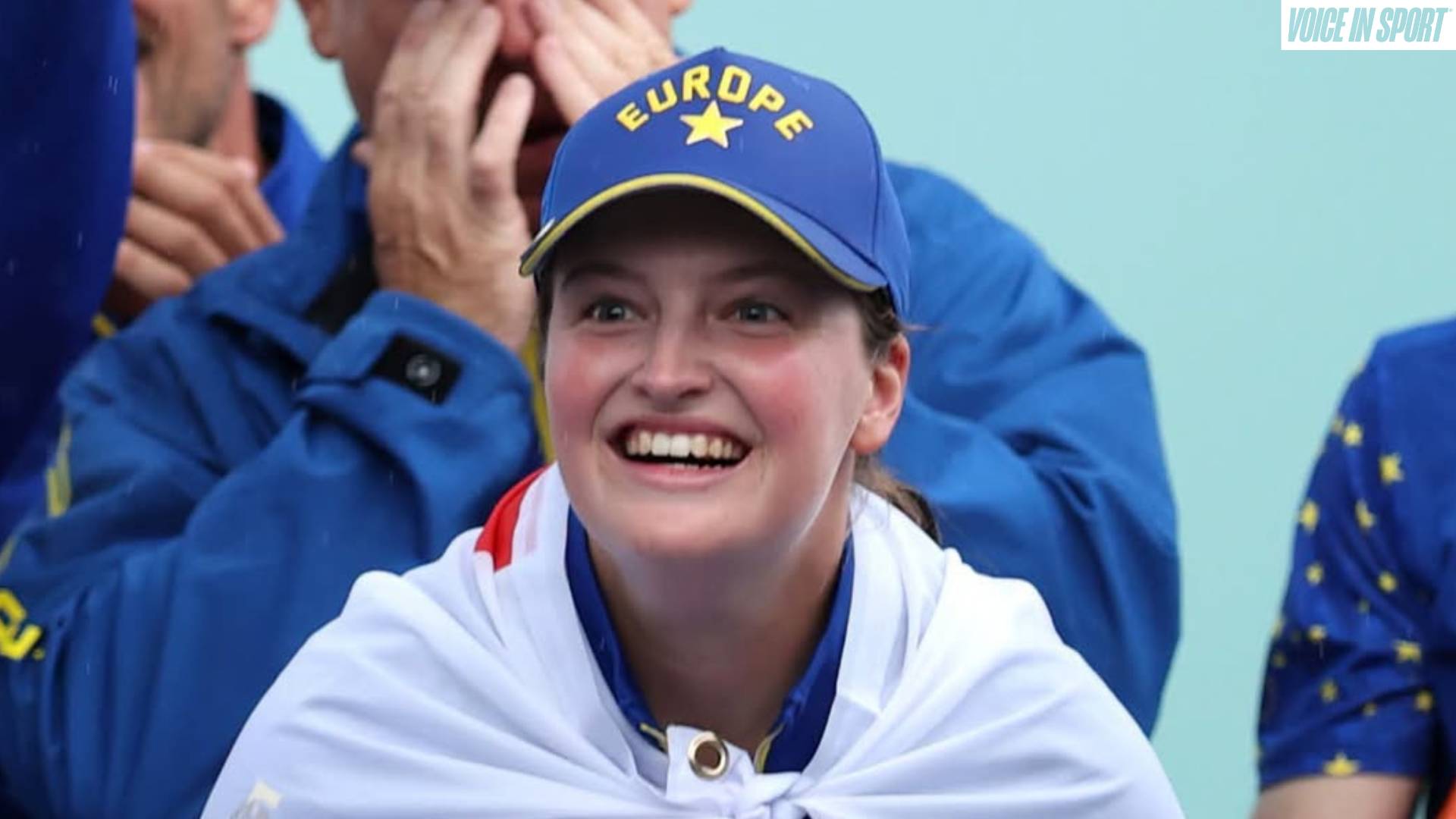
Lottie Woad arrived at Bernardus Golf as one of Europe’s most exciting young stars. At just 22 years old, the English rookie was already carrying enormous expectations. Then the Solheim Cup began, and things did not go according to plan.
After four team matches alongside Charley Hull, Woad had earned only half a point. Europe and the United States were tied 8-8 heading into Sunday’s singles, and every match suddenly mattered. Woad had not played badly, but golf is an unforgiving sport: good shots do not always become wins, and effort is not always reflected on the scoreboard.
For Woad, that distinction was painful.
“I was kind of letting everyone down,” Woad said in her post-match press conference, reported by EssentiallySports/Yardbarker.
That sentence may be the most important one from the entire tournament. It reveals the pressure placed on talented women to perform perfectly, especially when they are young, highly praised, and representing more than themselves. Woad was not just trying to win a golf match. She felt responsible for her teammates, her captain, and the expectations surrounding her debut.
But Europe captain Anna Nordqvist did not treat Woad’s early struggles as proof that she was not ready. She trusted her. Woad was sent out in the singles against American rookie Auston Kim, with Europe needing 6.5 points to reclaim the Cup.
The match quickly became a battle of momentum. Woad built a four-hole lead after the front nine, but Kim fought back by winning three consecutive holes. The match was no longer comfortable, and the pressure that had followed Woad all week returned at exactly the wrong time.
Instead of unraveling, Woad steadied herself. She birdied the 16th hole, then reached the 17th green with a two-hole lead. When Kim missed her putt, Woad calmly made par to win 2 & 1.
She did not realize immediately how important the putt was.
“I knew it was mine or Carlota’s (Ciganda) match,” Woad said.
Her victory moved Europe to 14 points and guaranteed a team win once Ciganda secured at least a half-point in the match behind her. Ciganda eventually defeated Jennifer Kupcho 4 & 2, officially giving Europe a 15-13 victory.
Woad’s achievement was not simply that she won the match. It was that she won after publicly experiencing doubt. Her story is more meaningful because she did not enter Sunday with perfect confidence. She entered carrying disappointment and played well anyway.
That is an important lesson for anyone who has mistaken confidence for fearlessness. Confidence does not always mean believing you will succeed. Sometimes it means continuing to act when you are unsure, embarrassed, or afraid of disappointing other people.
Nordqvist’s leadership was equally important. Her decision to keep trusting Woad and Hull showed that empowerment is not just encouragement after success. It is the willingness to give someone another opportunity before they have completely proven themselves.
“We just had a really good vibe all week,” Nordqvist said after Europe’s victory in her post-match interview with Sky Sports.
That “vibe” was not accidental. It was created through preparation, communication, and trust. Europe’s victory was built by veterans such as Ciganda and Leona Maguire, perfect performances from Linn Grant, and breakthrough contributions from rookies Nastasia Nadaud and Julia López Ramírez.
Woad’s moment, however, captures the emotional heart of the tournament. She began the week wondering whether she had let her team down. She ended it by helping deliver the trophy.
The Solheim Cup showed that women do not need to be flawless to be leaders. They need the opportunity to recover, the courage to keep competing, and teammates willing to believe in them before the final result arrives.
Woad did not become powerful because she avoided failure. She became powerful because failure did not get the final word.
