 X (Twitter)



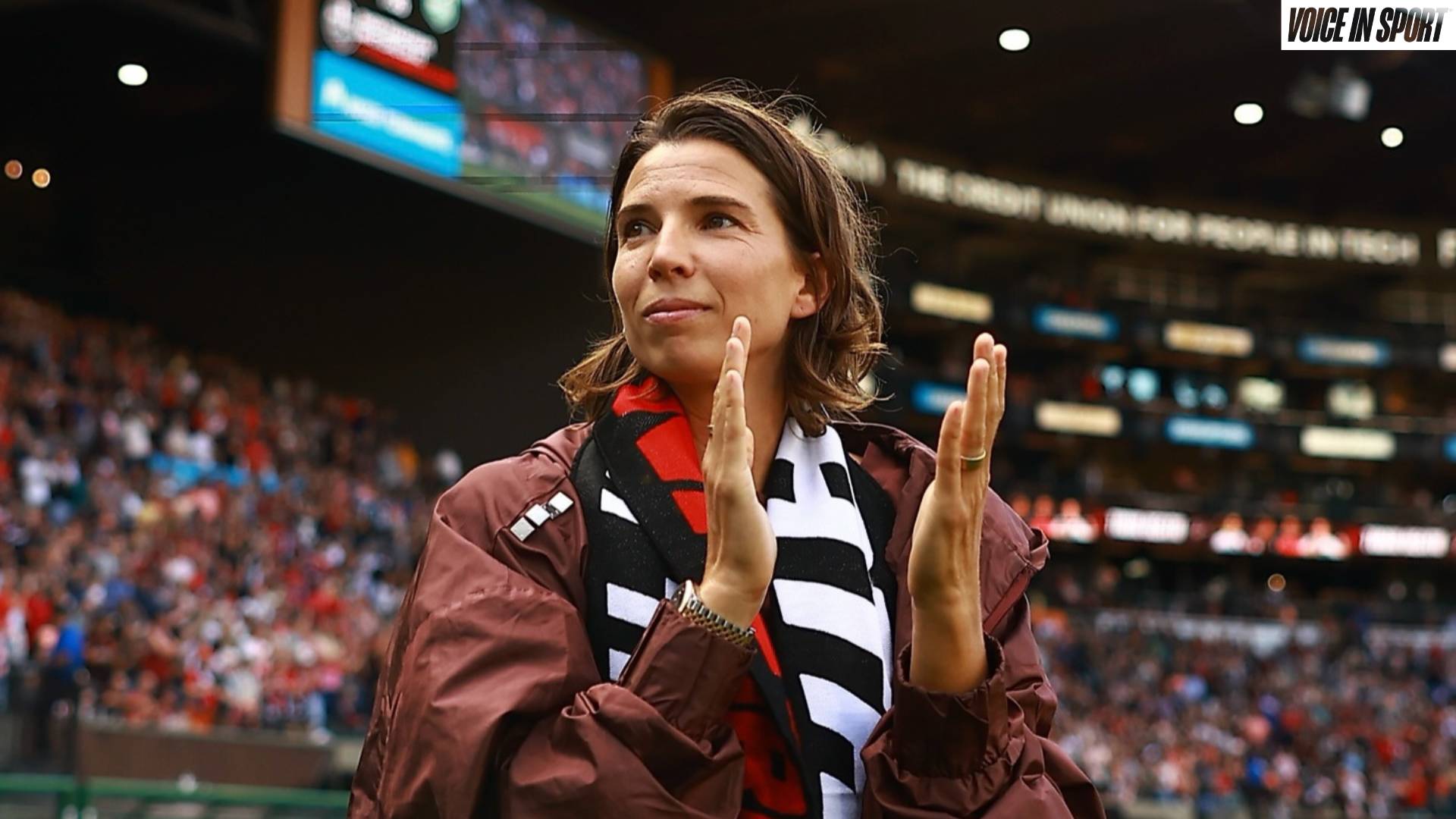
There is always something special about going home.
For Tobin Heath, home is Providence Park. On August 22nd, the Portland Thorns welcomed back one of the most influential players in club history, signing Heath to a ceremonial one-day contract so that she could officially retire as a Thorn. After seven seasons in Portland, two NWSL championships and a club record 24 regular season assists, Heath got to close the book on her playing career where so much of it was written.
It was a beautiful gesture for a player whose career helped define the early NWSL but the ceremony also opened up a more practical question: What does the NWSL actually offer its players when their playing careers end?
The answer is more developed than it was a few years ago.
The NWSL Retirement Bridge
The league’s current Collective Bargaining Agreement, which runs through 2030, includes specific provisions for players who retire. Under the NWSL’s rules, a player who retires after the previous league season and has at least six years of NWSL service can receive six months of COBRA health insurance premiums, provided they elect continued coverage. Players with at least 10 years of service who officially retire between 2024 and 2030 are also eligible for a one-time $5000 “founding player contribution” payment.
Those details can get lost when we talk about the bigger wins in the CBA, like guaranteed contracts, free agency and revenue sharing. The NWSL has recognized that a player’s relationship with the league does not necessarily end the day they stop playing.
The CBA also includes broader protections that shape the transition before retirement even happens, including mental health resources, protected leave, family-building benefits and caregiving support.
That is progress, but it is also important to distinguish that a retirement provision and a complete transition plan are not the same.
Tobin’s Retirement Wasn’t Overnight
Heath’s story makes that distinction particularly clear. She didn’t choose to walk away from soccer after one final match surrounded by certainty. Her final professional appearance came for OL Reign in August 2022. Knee injuries kept her away from the game and it took years before she fully accepted that her playing career was over. When she officially announced her retirement in July 2025, she described the process as something that had taken “two years, some might say three years," to accept.
At her National Soccer Hall of Fame induction, Heath put the emotional side of her transition more directly.
“When football was taken from me, I realized that was a death,” Heath said. “I didn’t know myself without being able to play football.”
Heath also spoke about what she discovered on the other side of that grief. “I’m actually not defined by one team or one crest or one club,” she said, adding that what she could give back to the game after playing could be greater than what she could give as a player.
That shift is one we should be talking about more.
Athlete care often focuses on keeping someone healthy enough to compete. We invest in strength and conditioning, nutrition, injury prevention, recovery and mental health because those things help athletes perform. Retirement is part of that plan too. The care should not suddenly disappear when the competition does.
Heath’s one day contract itself is not a retirement support program. It cannot replace mental health care, career planning or financial education. It does, however, give Heath something that can matter just as much during a major life transition: belonging.
“When football was taken from me, I realized that was a death. I didn’t know myself without being able to play football.”
Heath Had Resources Many Players Don’t
There is another important piece of the story: Heath’s experience that cannot be separated from her position within the sport.
She had a 17 year professional career, 181 USWNT appearances, two World Cup titles, two Olympic gold medals and major club success.
She also has opportunities and financial resources that many NWSL players simply will not have.
That matters when we talk about what retirement support looks like.
Heath has been able to build a life around the game beyond playing through her work with fellow USWNT teammate and partner, Christen Press, on The RE-CAP Show. She has also worked alongside FIFA’s Technical Study Group and had other opportunities within the world of soccer.
So, if a player with that level of access still described retirement as a long process of grief and adjustment, it is worth looking into what that transition may look like for players who have fewer financial resources, industry connections or even visibility.
This opens up the conversation on what comes next.
The goal isn’t to recreate an athlete’s playing career but to build a bridge for whatever comes next.
When we talk about athlete wellbeing, it is easy to focus on the moments we can see: the comebacks, championships, celebrations, and even injury. Retirement is quieter. There is no scoreboard that tells you how you’re doing and no coach handing out a game plan.
The One Day Contract is More Than A Ceremony
Heath’s one day contract did not give her health insurance or a financial plan. It also did not solve the emotional complexity of retirement.
Instead, it provided her with a way to close the loop.
Not every retired player will need that exact experience nor will most even want a public farewell. It’s the principle behind it that’s worth keeping.
What if clubs thought about retirement as a transition rather than an ending?
That could mean alumni programs, mentorship opportunities, career connections, financial education or even just continued access to mental health resources. It could be the difference between flowers and helping the player identify what they want their next chapter to look like while they're still playing, rather than waiting until their final season is over.
The NWSL has already established a foundation through its CBA. The next question is how clubs and the league can make that actually feel like a bridge.
The Celebration Should Start a Bigger Conversation
Portland is becoming an interesting case study for what that future could look like.
The city has long had a deep relationship with women’s sports. Now, that relationship is being backed by serious infrastructure. Portland is already thinking expansively about what athletes need during their careers. The next question is whether that same infrastructure can extend to the transition out of competition.
The Portland Thorns and the WNBA’s Portland Fire share ownership under RAJ Sports, and the city is now home to the first U.S. performance center shared by professional women’s teams from two different sports.
The $150 million-plus Kaiser Permanente Performance Center was built specifically around the needs of women athletes, with soccer fields, basketball courts, strength and conditioning spaces, recovery facilities, nutrition services and family spaces. The project repurposed a former Nike office campus, with Nike now partnering with RAJ Sports on the future of women’s sports.
The performance center is designed to help athletes perform, recover and care for their bodies while they compete. Retirement asks for a different kind of infrastructure: one that helps athletes build careers, communities and identities beyond competition.
Portland has shown it is willing to invest in the infrastructure surrounding women’s sports. The question now is whether that investment can follow athletes into the next chapter of their lives.
Maybe Portland is also the right place to ask: What should we be building for athletes after they retire?
The Next Chapter Counts
Post-career care cannot become another place where an athlete’s level of fame determines the support she receives.
That conversation should start well before retirement.
If clubs can invest $150 million into a facility designed around women’s performance, they can also think creatively about what it means to support the whole career of a woman athlete; including the part that comes after competition.
Heath gets her roses, as she deserves.
But her return to Portland can be more than a celebration of one legendary career. It should serve as a reminder that athletes do not stop being part of a sport when they stop playing it.
Maybe the next generation of athlete care looks less like a final goodbye and more like a bridge because going home should not be reserved for some while others are left to figure out the rest by themselves. It should be part of the plan.
