X (Twitter)



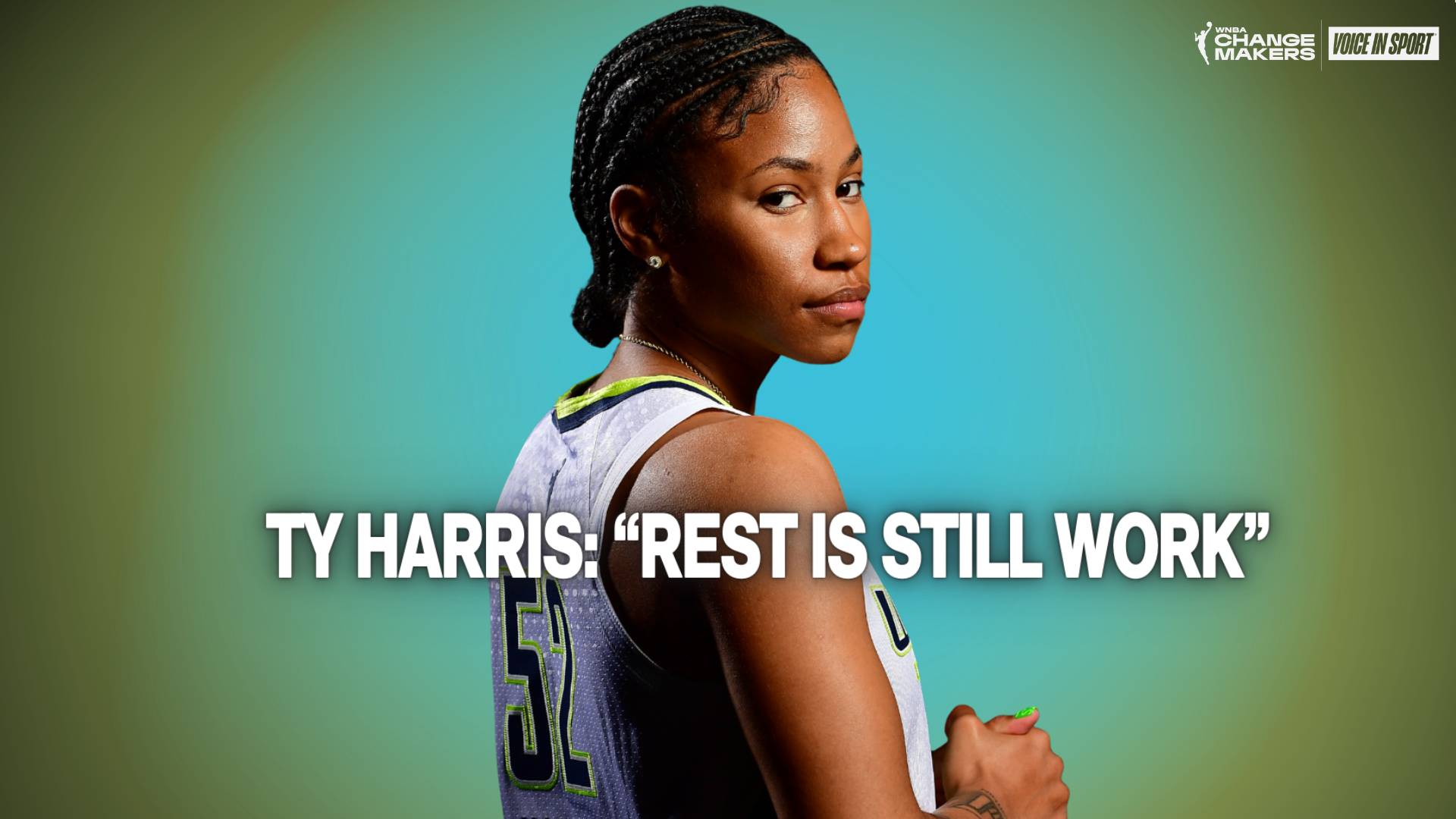
Five games into 2025 WNBA play, Dallas Wings guard Ty Harris’ season was over.
A patellar tendon injury meant surgery and months away from the court. It was the first major surgery of her career. Harris had experienced interruptions before—the COVID-19 shutdown that cut short her college postseason, the isolation of the WNBA bubble—but this was the first time that basketball had been taken away because her body physically couldn’t continue.
For someone who has played the game since she was four years old, the sudden stillness was jarring.
“As athletes we’re wired to feel like we always have to be on the go,” Harris said. “Always grinding, always contributing, always on the floor. When you're used to competing and suddenly you're watching from the sidelines, it can mess you up. It messed me up.”
When Harris learned she would need season-ending surgery, the emotional impact hit immediately. She spent the first day crying, overwhelmed and distraught as the reality of the injury began to sink in.
“Basketball had always been my identity. Without it, I felt lost. I felt left out,” Harris said. “Who was I? I struggled watching my teammates compete when I couldn't contribute.”
For athletes, productivity is often defined by performance: minutes played, shots made, games won. Sitting out can feel like falling behind, and Harris struggled with that feeling early in her recovery.
The shift from constant motion to forced stillness created a sense of guilt. While her teammates prepared for games, Harris spent her days in rehab, slowly rebuilding the strength in her knee.
“Basketball had always been my identity. Without it, I felt lost. I felt left out.”
At first, it didn’t feel like enough.
But over time, she began to reframe what the work actually looked like. Her routine became structured around recovery: treatment sessions, strengthening exercises, mobility work, and the small, repetitive tasks required to rebuild her body.
“I had to remind myself that healing was a part of the work too,” Harris said. “A lot of my days were built around treatment: strengthening exercises, mobility work, and making sure I stay consistent with the little things that help your body heal.”
The Dallas Wings also encouraged Harris to remain involved with the team even when she couldn’t play. She continued attending meetings, film sessions, and practices, staying connected to the group while focusing on her own recovery. Slowly, the way she viewed rest began to change.
“Once I shifted my perspective and saw recovery as preparation instead of absence, that guilt started to fade away, and I learned to give myself permission to rest and trust that the work I was putting in behind the scenes still matters, and that I still matter,” Harris said.
Rethinking Progress
The process also forced Harris to redefine what progress looked like. Before the injury, improvement was measured by performance on the court. During rehab, progress came in much smaller ways.
“Some days, productivity was just getting through rehab,” Harris said. “Managing pain. Showing up with a good attitude, even when things were frustrating.”
There were days when the slow pace of recovery tested her patience.
“I was like, ‘I’m tired of doing the same thing. I’m tired of coming here and not seeing big results,’” Harris said.
But then she would remind herself how far she had already come.
“At one point I couldn’t walk. I couldn’t even bend my knee,” Harris said. “So being able to squat, being able to jump, even doing a little side shuffle—even if it’s not 100 percent—that’s a win in my book.”
The experience reshaped her understanding of productivity. Instead of measuring success only by visible outcomes, Harris began recognizing the value of work happening behind the scenes.
“Progress isn’t always visible,” Harris said. “Most of the important work athletes do happens when nobody is seeing it.”
Recovery required something athletes aren’t always comfortable with: patience.
“We’re used to controlling outcomes through effort,” Harris said. “But recovery doesn’t move at the pace you want it to. It forces you to trust the process.”
Learning to trust that process meant allowing herself to rest without feeling like she was falling behind. Instead of seeing recovery as time lost, Harris began to view it as time invested in her health, her longevity, and her future in the game.
With that shift also came a deeper appreciation for life beyond basketball. As the season went on, Harris began to embrace the slower pace that recovery forced upon her. Traveling with the team gave her opportunities to experience cities in ways she rarely could during the grind of a WNBA season.
“The truth is injuries and illness happen. They're a part of life. But here is what I learned: they force you to slow down. They make you listen to your body. They test your patience. And they reveal how strong you are on the inside.”
Finding the Bright Side
“I was frustrated that I got hurt,” Harris said. “But as the season went on, I started thinking, ‘Now I get to go on many vacations. I get to travel the world and not have to stress about being ready to play a game.’”
Instead of rushing from shootaround to game to recovery, she found small moments of freedom.
“While [the team] had their schedule, I’d be like, ‘What am I going to do today?’” Harris said with a laugh. “Let’s go to the ice cream shop or go shopping or something. I got to enjoy life and just take it for what it was.”
Off the court, Harris used the time to slow down in ways the basketball schedule rarely allows. She spent more time with family and leaned into reflection and personal growth.
The mental side of recovery became just as important as the physical one. A sports psychologist recommended the book Inner Excellence, which helped guide her mindset during rehab. Harris also began journaling and practicing mindfulness techniques to manage the frustration that came with setbacks.
Harris now sees the injury differently. What once felt like an interruption became a lesson in patience, perspective, and learning that rest is not the opposite of work.
“The truth is injuries and illness happen. They're a part of life,” Harris said. “But here is what I learned: they force you to slow down. They make you listen to your body. They test your patience. And they reveal how strong you are on the inside.”
For Harris, the injury ultimately became about more than healing her knee.
“That injury wasn’t just about my knee,” Harris said. “It was about me learning to rebuild who I was.”